
Have you ever walked out of a store thinking you got a great deal, only to find the same item cheaper somewhere else? This happens more often than you’d expect. Retailers use pricing patterns and layout cues to draw attention to full-price items, while genuine savings sit just outside your line of sight.
The good news? Once you know how to read these signals, finding genuine savings becomes much easier than relying on whatever’s marked “sale.”
In this article, we’ll break down the tactics stores use to hide their best deals and show you how to spot them first. When you’re done reading, you’ll walk into any store like a shopping champ who knows exactly where the real value sits.
What Makes Hidden Deals So Hard to Spot?
Retailers use pricing tricks that bypass your conscious thinking. You see a number, your brain makes a snap judgment, and by the time logic catches up, you’ve already decided it’s a good deal.
Two tactics make this especially effective.
Charm Prices Make You Think It’s Cheaper

Prices ending in .99 or .95 feel like bargains even when the actual savings equal pennies. Research from the Journal of Consumer Research shows that people process $19.99 as closer to $19 than $20, creating a bigger perceived gap than one cent justifies.
This happens because you focus on the leftmost digit and round down automatically. Your brain grabs that first number and builds its judgment from there before processing the rest.
Even knowing this doesn’t stop the automatic reaction, which is exactly why retailers use it everywhere. You’ll rarely find a price ending in .00 when you shop. The difference between $29.99 and $30 feels enormous in the moment, even though it’s literally one penny. That’s left-digit bias at work, and it consistently makes you underestimate spending totals.
Bundles Hide the Real Math
Package deals make it harder to calculate per-item value compared to buying things separately. When retailers mix different product types, like streaming service plus hardware plus subscription box, you can’t quickly figure out if the bundle actually saves money.
That confusion isn’t accidental. Many bundles pair one appealing item with several lower-value products to inflate perceived value. You end up buying things you’d normally skip just to access the “discount.”
Think paying for three streaming services when you only watch one, or getting a router upgrade you don’t need to save $10 on internet installation. Most customers never add up individual prices to verify the deal. The math gets fuzzy, and that fuzziness works in the retailer’s favor every time.
How Stores Arrange Products to Drive Your Purchases
Walk into any store, and you’ll notice some products grab your attention while others hide. Think that’s random? It’s not.
Retailers use five placement strategies to drive purchases.
- Eye-Level Equals Buy-Level: Premium items sit right in your natural line of sight, while budget options hide on bottom shelves. The more visible an item is, the more likely you are to buy it, so companies pay premium fees for the eye-level space.
- Checkout Lane Traps: Products near registers carry huge margins because you’re already committed to buying something. Retailers fill these spaces with candy, drinks, batteries, and other small items that cost little to stock but sell at high markups.
- Product Clustering: When you grab pasta, the sauce sits right next to it. This arrangement works because buying one item creates the thought that you need the other. Retailers group products strategically so one purchase leads to several, which increases how much you spend per trip.
- Endcap Illusions: Those displays at the end of aisles grab more attention than mid-aisle products. The prominent positioning makes items look like featured deals even when the price matches what you’d find elsewhere in the store.
- Loss Leader Strategy: Stores advertise one deeply discounted item to pull you through the door, then surround you with full-price merchandise. The advertised deal might lose the business money, but it creates foot traffic. Once inside, you typically add several full-price items to your cart before leaving.
Recognizing these patterns helps you shop with intention instead of impulse.
Bundle Deals: Where Genuine Savings Hide in Plain Sight

Have you ever grabbed a bundle thinking you scored a deal, only to realize half the items just sit unused? That happens because most shoppers never check whether the bundle actually saves money.
To avoid overpaying, calculate each item’s standalone price before trusting the advertised savings. A “buy 2 get 1 free” deal stops looking great when you discover the regular price jumped 30% right before the promotion started.
The real test is whether you’d buy everything in the bundle anyway. For example, good bundles discount items you already planned to purchase, like shampoo and conditioner together at a lower combined price. Bad bundles, on the other hand, force you to pick up unwanted items just to access the discount, like adding hair gel you’ll never use.
Some retailers take this approach even further. They combine one item you actually want with low-value extras to make the deal look bigger. You’ll see this with packages that pair a desirable product (like the latest phone model) with clearance accessories or outdated add-ons.
Companies design these bundles to move slow-selling inventory by attaching it to items customers actually want. The headline price might look like a steal, but the real value comes from bundles that save you money on things you actually need.
Timing Tactics: When Sales Don’t Mean Discounts
That 40% off sticker looks impressive until you check the price history and see the item sells for this amount every few weeks. Not every discount means you’re getting a better deal than usual. That’s because retailers cycle prices strategically to make regular rates look like limited-time offers.
Two patterns reveal when sales actually mean savings.
Price History Shows What You’re Actually Paying
Products bounce between “sale” and regular prices so often that many items spend more time “on sale” than at full price. That’s why checking price-monitoring tools over a few weeks shows whether today’s discount actually beats what the item normally sells for.
Over time, these patterns become predictable. Some items hit sale prices monthly, so waiting a few weeks costs you nothing extra. The “was $100, now $70” tag means little if the product rarely sells above $70 anyway.
Flash Sales Push Urgency Over Value

According to a study by the Journal of Personality and Social Psychology, artificial scarcity increases perceived value even when prices match everyday market rates. Flash sales are built to exploit that effect.
Limited-time offers pressure shoppers to buy now instead of comparing prices across retailers. Countdown timers amplify that pressure by making hesitation feel costly. The urgency feels like proof the deal is special, when in reality it often isn’t.
Many flash sales mirror discounts available elsewhere, just without the timer. The goal isn’t to offer a better price but to shorten the decision window so you skip the comparison step entirely.
Clearance Cycles Most Shoppers Never Notice
Retailers follow predictable markdown schedules based on product type, but most shoppers buy when demand peaks instead of when prices bottom out.
Seasonal items typically hit their lowest prices 6-8 weeks after the season ends, once retailers need shelf space for incoming inventory. For example, winter coats drop in late February, not December, when you actually need one. The same timing applies to summer goods. Patio furniture hits clearance in late August, well after peak demand passes.
Electronics follow a different cycle because they’re tied to product refreshes rather than seasons. Older models drop in price 4-6 weeks before new releases. So last year’s phone, laptop, or gaming console often delivers nearly identical performance at a significantly lower price once retailers prepare for the next launch.
Groceries work on even shorter cycles. Perishable items get marked down on consistent schedules, often early mornings on specific weekdays. Even with these predictable markdown schedules, most shoppers miss the discounts. Timing is the reason: they shop during peak hours, when full-price stock dominates the shelves instead of clearance items.
Tactics to Catch Deals Others Miss
Once you understand these patterns, finding value becomes a process instead of luck. Most shoppers skip the verification steps that separate genuine savings from inflated deals.
Here are four methods that help you verify if you’re getting actual value:
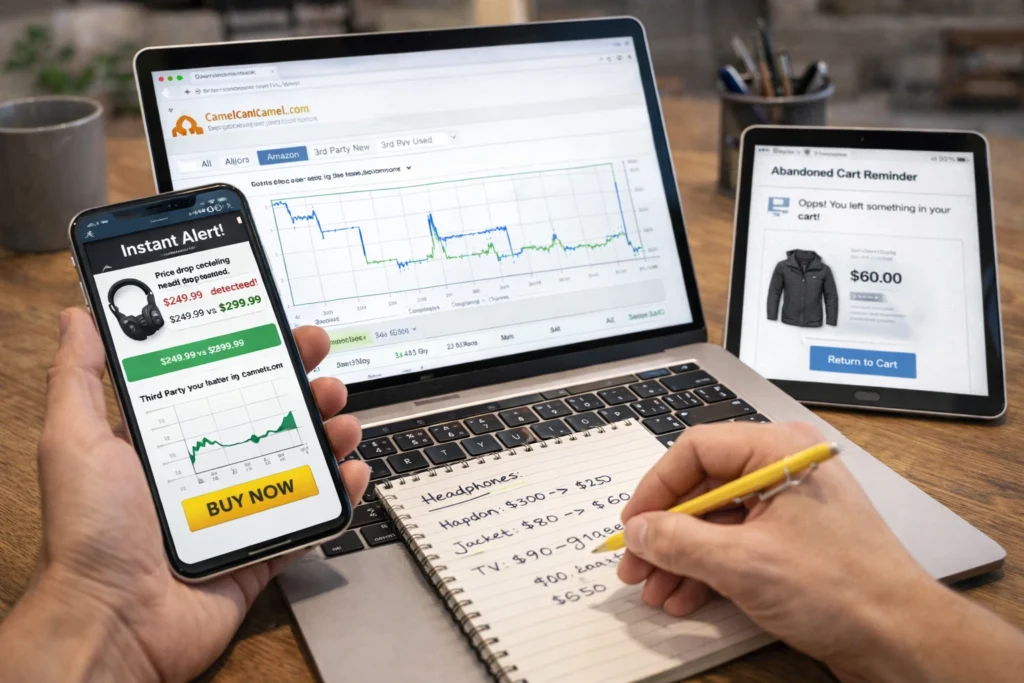
- Check Price History Before Buying: You can use tools like CamelCamelCamel and Keepa to check whether today’s price beats the product’s typical cost or just matches what it normally sells for. These tools add functionality that lets you see pricing patterns over weeks or months, which reveals whether a “sale” is genuine or just standard cycling.
- Compare Per-Unit Pricing: Bulk packaging looks like the obvious choice until you compare per-unit costs and find the medium size actually costs less. Store shelf tags usually show price per ounce or per item in small print. That number tells you more about the actual value than the total package price when you’re comparing options.
- Set Up Price Alerts: Signing up for price alerts takes about five minutes, and it pays off when that $180 item drops to $120. Tools like Honey, Slickdeals, and even Amazon’s built-in wish list feature notify you when prices fall below your target. This way, you catch deals without checking manually every day.
- Abandon Your Cart Strategically: Leave items in your online shopping cart and wait. Retailers often send discount codes to recover abandoned sales, especially for higher-value purchases. This tactic doesn’t work everywhere, but enough companies use it that it’s worth trying when you’re not in a rush.
These steps take minutes but consistently uncover savings that rushed shoppers miss entirely. The effort pays for itself the first time you catch a price drop that everyone else overlooks.
Start Finding the Best Deals Today
Retailers spend millions designing pricing and placement strategies that steer your attention away from genuine value. Now you know how charm prices, product placement, bundle tactics, and clearance cycles make some offers harder to spot.
Next time you shop, try these simple steps:
- Check price history before trusting a sale sticker.
- Compare per-unit costs across different package sizes.
- Wait for clearance cycles instead of buying during peak demand.
These small changes add up to serious savings over time. Want curated deals delivered straight to you? Visit Unsubscribe Deals for expert-vetted discounts across categories from electronics to travel packages.