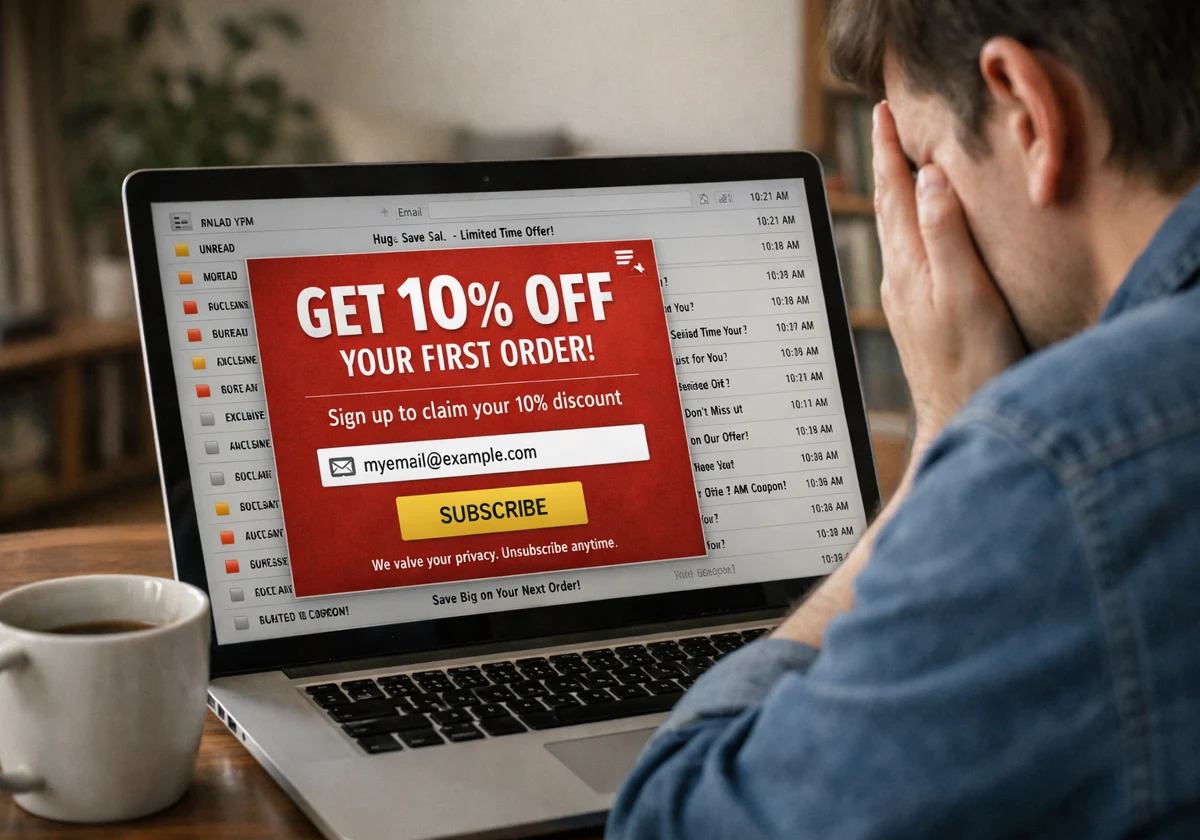
You know that 10% off pop-up that appears the second you land on a retail site? Most people type in their email without thinking twice.
And if it sounds too good to be true, it’s because it is. When you subscribe, you’re not just sharing your contact details. You’re letting brands track what you browse, what you click, and how often they can pull you back with another offer.
Over time, those emails also fill your inbox. The more promotional messages you receive, the easier it becomes for fake discount emails and scams to slip in. The real discount email risks go far beyond inbox clutter. They affect your wallet, your privacy, and your security.
This article breaks down what actually happens after you hit subscribe. You’ll see why that “small” 10% discount often costs you way more than it saves.
Let’s start with what retailers actually do with your email address.
What Really Happens When You Enter Your Email Address
When you type your email into that discount pop-up, you’re permitting retailers to track your behavior across their site and beyond. Your email gets added to marketing databases that monitor what you browse, what you buy, and what makes you click “add to cart.”
Retailers use this data to build detailed profiles of your shopping habits. They know if you’re a bargain hunter who waits for sales, an impulse buyer who responds to urgency tactics, or someone who abandons carts but comes back later.
Think about what happens next. You browse running shoes on Monday but don’t buy. Tuesday morning, you get an email with “Still thinking about those shoes?” On Wednesday, they sent a 15% off code. By Friday, it’s “Last chance!” with free shipping. They’re using your browsing data to create a customized pressure campaign.
And once you’re in their system, the data collection doesn’t stop. Each sign-up creates permission for ongoing contact that extends well beyond that initial 10% discount, often indefinitely unless you manually unsubscribe from every single list.
Data Collection Behind Discount Email Marketing Campaigns
Ever wonder why you keep getting emails about products you looked at days ago?
Email marketing campaigns use data collection methods that go way beyond your inbox. What starts as a simple discount sign-up turns into tracking across devices, third-party data sharing, and pre-checked boxes you never noticed.
How Companies Track Customer Behavior Beyond Your Inbox
Most marketing emails include tracking pixels. These small, invisible elements register when you open a message and which links you click. Combined with website data, they help brands understand what interests you, when you engage, and which messages prompt action.
This tracking doesn’t stop at one device. If you open emails on your phone and browse on your laptop, those interactions are often connected through your account activity or cookies. Over time, patterns emerge that shape the timing, frequency, and type of offers you receive.
Third-Party Sharing You Rarely See
Many shoppers think signing up with one retailer means only that retailer has their email. In reality, data-sharing agreements often allow marketing partners to access your details. These partners may combine your email with purchase behavior, browsing data, or demographic information obtained from other sources.
So what does this mean for you? A single sign-up can place your email into multiple marketing systems, even if you never actively subscribed to each one.
Pre-Checked Boxes and Sign-Up Tactics
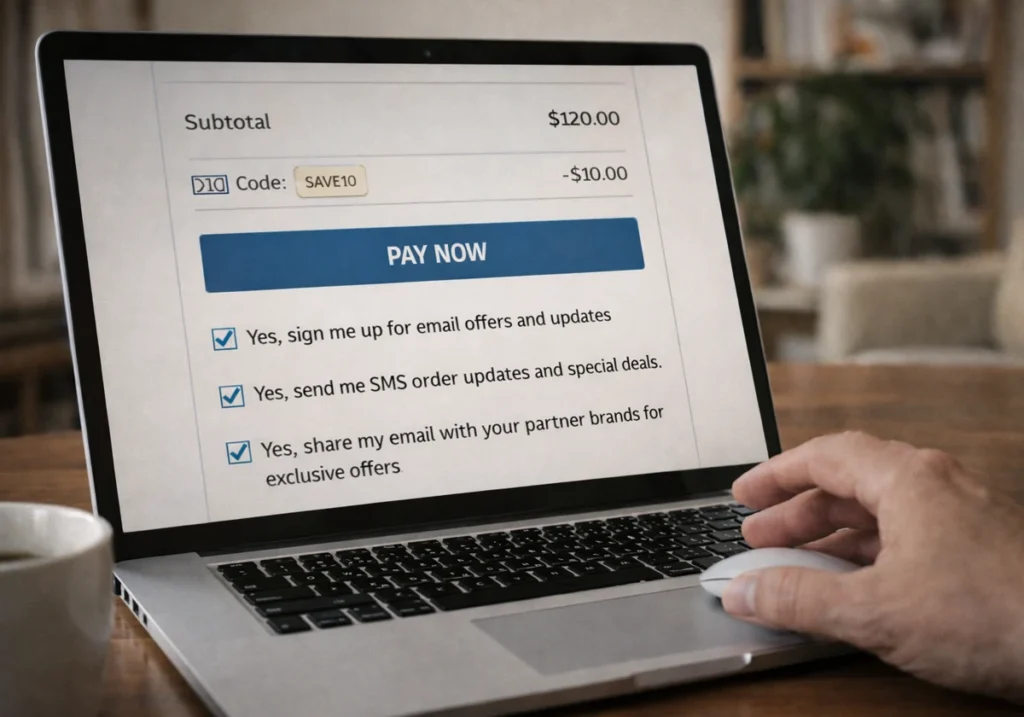
Sign-up forms often include pre-selected options for partner marketing that most people miss. Take this, for example. When you’re checking out with a new pair of jeans, three boxes below the payment button are already ticked. One’s for the store’s marketing emails, another for SMS updates, and a third for partner offers from “trusted brands.”
Websites also hide discount codes behind email submission walls, so you can’t access the deal without becoming a subscriber. Pop-up timing plays a role, too. They catch you mid-browse when you’re focused on products, not reading terms about implied consent or email preferences. By the time you realize what you agreed to, you’re already on multiple marketing lists.
The Inbox Clutter Problem Nobody Talks About
The worst part about signing up for discount emails is how quickly one subscription turns into dozens of messages every week. One discount sign-up typically generates multiple marketing emails as companies segment their lists into different campaign types. You get separate messages for new arrivals, flash sales, cart reminders, and “exclusive” offers. And this is just from one store.
Once you’re subscribed to five or six retailers, your inbox becomes unmanageable. You’re suddenly getting 30 promotional emails per week. Most follow the same playbook, too. Limited-time offers create artificial urgency, while partner brands add their own campaigns on top of the original store’s emails.
Managing hundreds of these emails monthly wastes time better spent on almost anything else. The constant flood also means you end up scrolling past hidden deals because you’re overwhelmed by the sheer volume. What was supposed to save time and money does the opposite.
How Discount Emails Increase Your Exposure to Scams
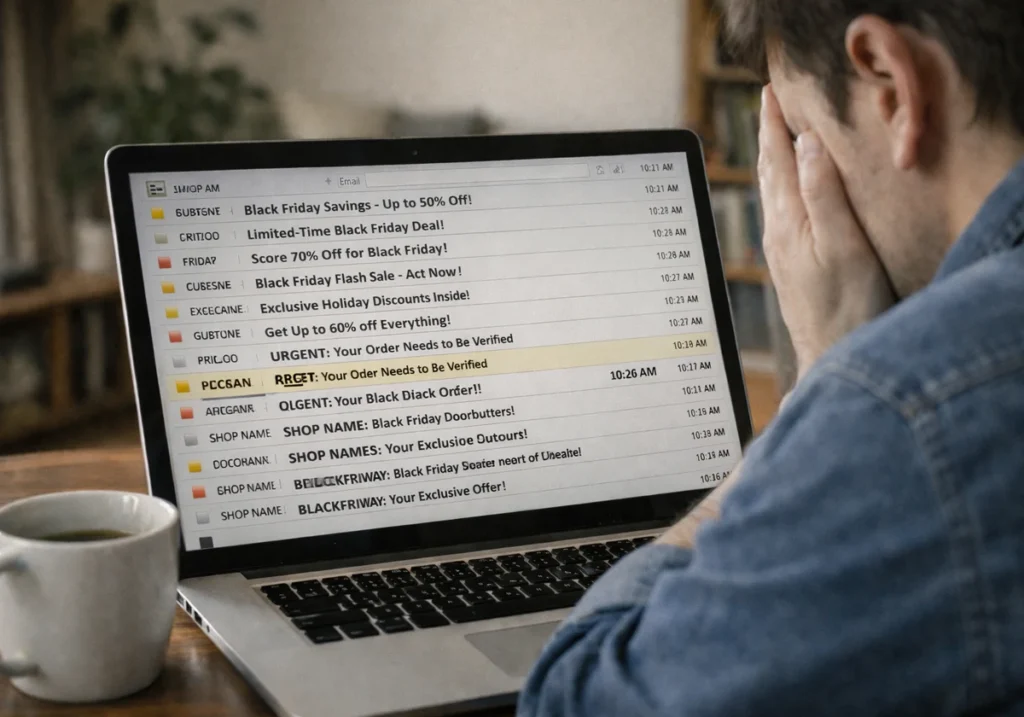
The more legitimate discount emails you receive, the easier it becomes for scammers to hide fake messages among the real ones. When your inbox overflows with promotional content, you stop scrutinizing every message carefully. Here’s how this volume problem works in scammers’ favor:
- Familiar Branding: Scammers copy the exact email layouts and logos from retailers you actually subscribe to. These phishing attempts look identical to real discount offers you’d normally trust (down to the font choices and button colors). When it lands in your inbox next to three other promotional emails, you don’t question it.
- Timing Tactics: Notice how fake emails spike during Black Friday or holiday sales? That’s deliberate. Fraudsters know you’re already expecting multiple promotions, so a suspicious message blends right in with legitimate flash sales. You’re rushing through emails looking for deals, not red flags.
- List Visibility: When your email shows up on marketing databases, it signals you’re an active online shopper who actually opens promotional emails. That makes you a high-value target worth the effort of crafting convincing scams.
Once you’re drowning in discount emails, spotting the fake ones becomes nearly impossible. And scammers know it.
Email Marketing Advantages vs. Your Data Protection Cost
Email marketing campaigns deliver some of the highest returns in digital advertising. For every dollar spent on email, businesses see an average return of $36 to $38. That’s a 3,600% ROI that beats most other marketing channels.
Small businesses and major retailers use it because campaigns can be launched quickly and generate revenue with relatively low overhead. In fact, around 41% of marketers say email is their most effective channel, well ahead of social media and paid search.
Now flip that around to your perspective. While companies gain cheap, direct access to your inbox, you trade away control over your personal information. Each click adds to your customer profile, and each purchase sharpens how future offers are targeted. In other words, the system rewards data collection and customer responsiveness, not privacy protection.
The trade-off is simple. Businesses gain increasingly detailed insight into your shopping behavior, while you receive messages shaped by that same data to influence what you buy next.
Why CAN-SPAM Act Compliance Doesn’t Equal Protection
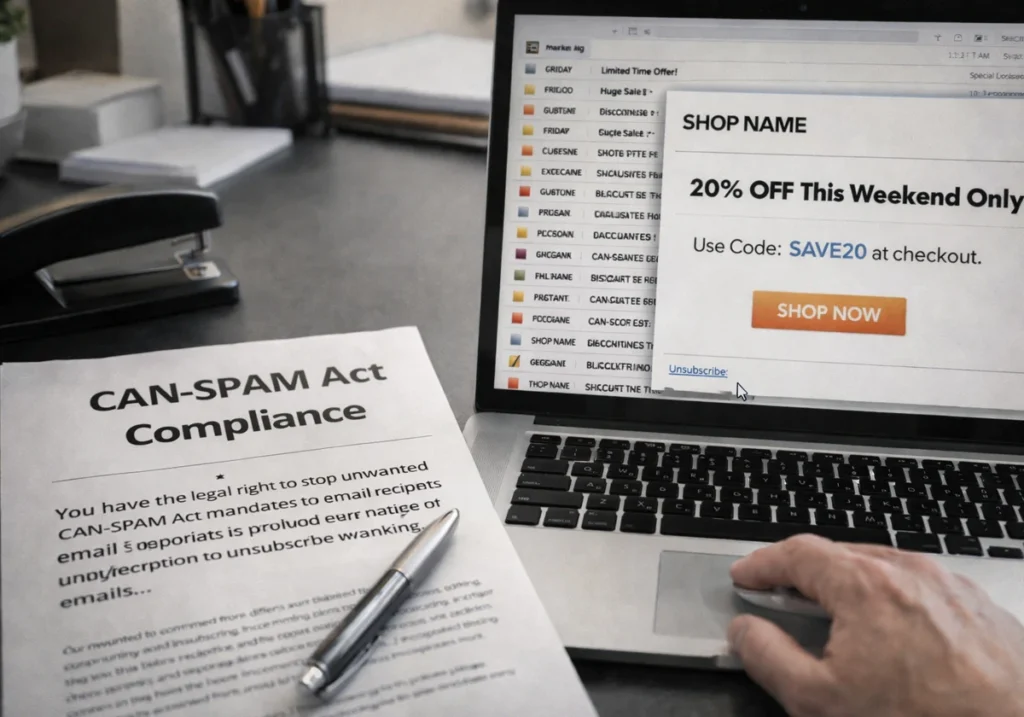
The CAN-SPAM Act is a U.S. law that regulates commercial email by setting minimum standards for marketing messages. Its main goal is to reduce spam, not limit how many promotional emails arrive from companies you’ve interacted with.
CAN-SPAM compliance requires businesses to include an unsubscribe link in every email, use accurate routing information, and provide a real physical address. Companies must honor opt-out requests within 10 days. Those are the basics, and most legitimate retailers follow them without issue.
But notice what the law doesn’t do. It doesn’t prevent companies from sending daily promotions. It doesn’t stop them from sharing your email with marketing partners, who can then start their own campaigns as long as they also include an unsubscribe link. And it doesn’t limit how much customer data is passed around between businesses before you even know it’s happening.
Think of the CAN-SPAM Act as an exit door, not a shield. It lets you leave, but it doesn’t stop the flood of emails or the data sharing that follows.
Reclaiming Control Over Your Inbox
Now that you know what happens behind the scenes, those discount pop-ups look a bit different. The 10% off comes with tracking, data sharing, and inbox clutter that most people never consider when they type in their email.
You don’t have to avoid deals entirely. The trick is being selective about who gets your information and understanding what you’re trading for that small savings. A few minutes managing your subscriptions now saves hours of cleanup later.
If you’re looking for offers without the data collection baggage, Unsubscribe Deals curates deals so you don’t have to hand over your email to dozens of retailers. Sometimes the best discount is the one that doesn’t cost you your privacy.