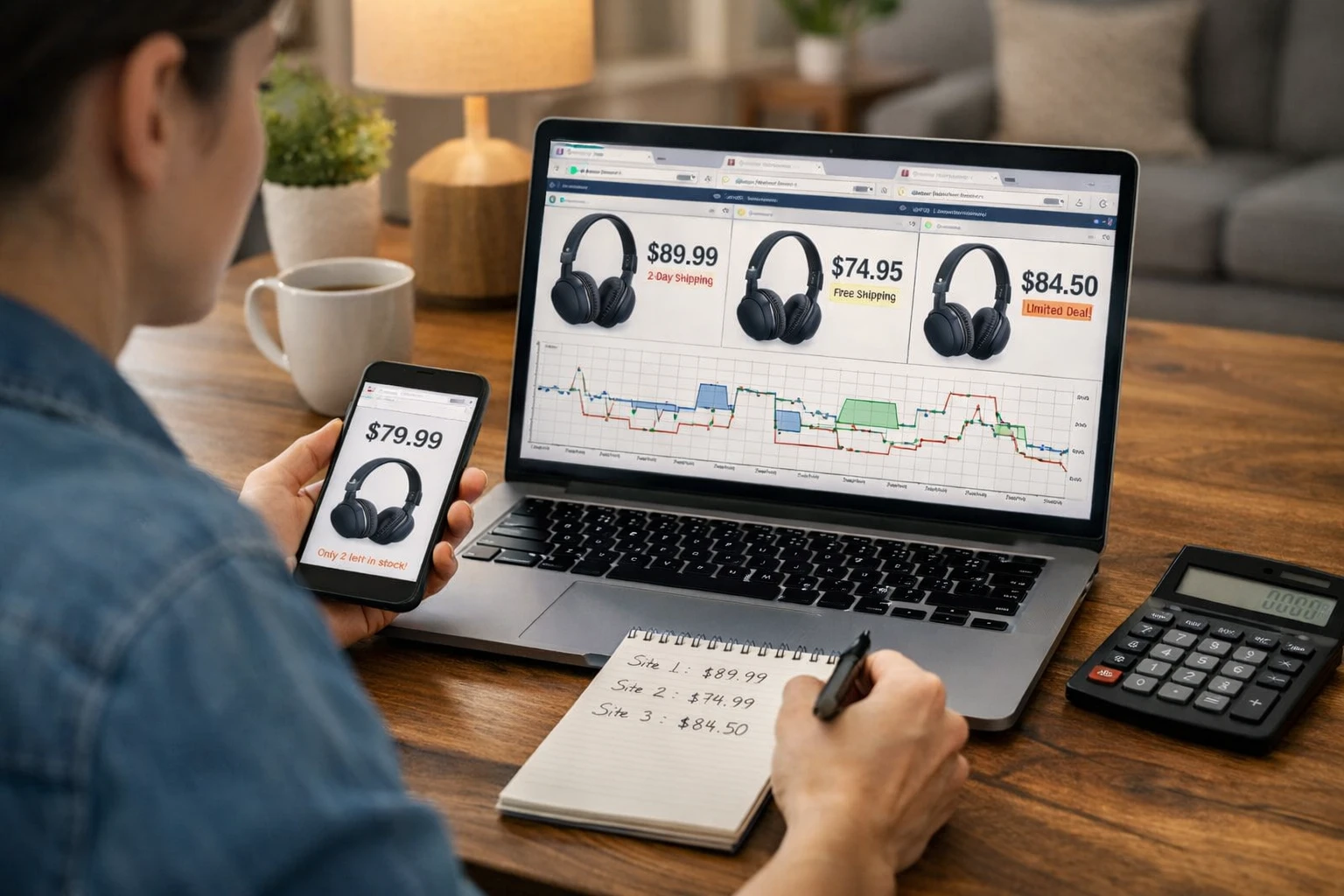
Comparing old deals reveals the actual cost of products over time. For example, that laptop that’s on sale today for $850 might drop to $700 on Black Friday. When you know the pattern, you’ll stop overpaying.
The problem is that most shoppers buy based on the first discount they see. Retailers know this, which is why prices sometimes rise before a sale and then drop with a large discount.
So we put together this guide to help you spot those situations. You’ll learn how past prices reveal patterns and which tools track deals automatically. Let’s start with what deal comparison actually means.
What Deal Comparison Means for Shoppers
Deal comparison means checking how much a product used to cost to judge if today’s price is actually lower or just marked as a sale. Most people assume a discount tag means they’re saving money, but historical data tells a different story.
When you look at past prices, you’ll find products that stay at the same cost year-round despite showing sale tags constantly. You’ll also catch items where the price jumped 20% right before a supposed 15% off sale. In other words, you’re paying more than the regular price while thinking you scored a deal.
This approach helps shoppers make better decisions about when to buy. Some items drop to their lowest price at the same time every year, while others rarely discount at all. Once you figure out which category your product falls into, you’ll stop buying at the wrong time.
Price Patterns Hide in Your Purchase History
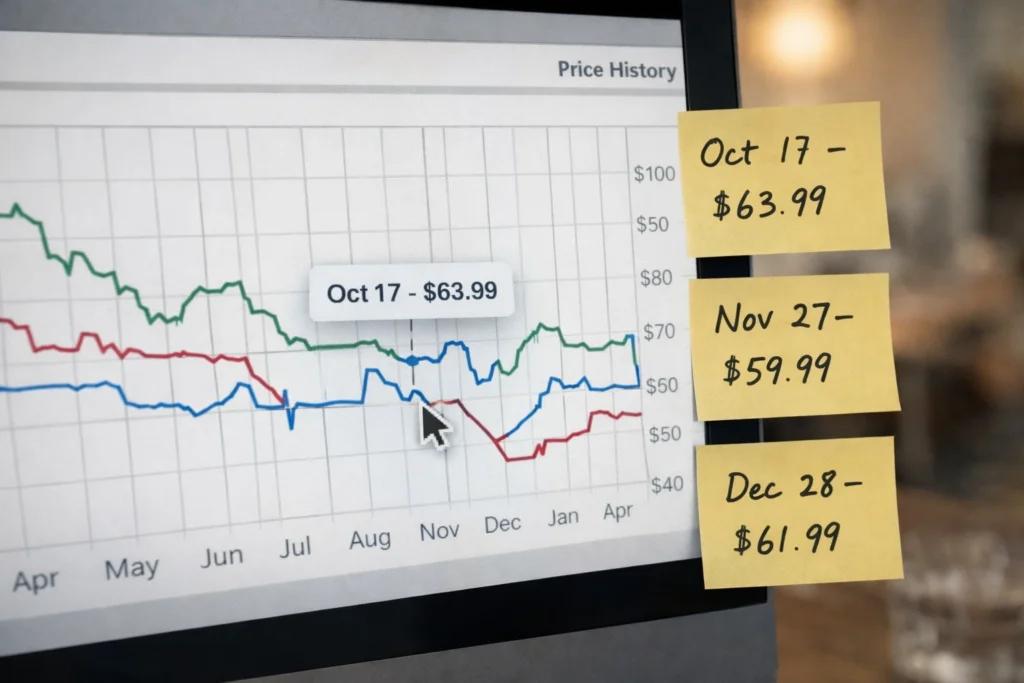
Price patterns often hide in your purchase history, and most shoppers never look for them. When you track how prices change over several months, you’ll notice the same items drop to similar low points each year.
Two price patterns show up consistently across nearly every product category:
Price Cycles Repeat More Than You Think
Electronics drop prices right before new models launch, typically following the same schedule every year (and yes, that new phone timing isn’t a coincidence). This happens because retailers want to clear out older inventory before the updated version arrives.
Major shopping events like Black Friday repeat similar percentage discounts across the board on the same product categories each year. If headphones went 40% off last Black Friday, expect something close this year.
Seasonal Discount Trends Are Predictable
Seasonal items are discounted at the same time every year because retailers need to clear inventory before the next season arrives. For example, you’ll find winter clothing hitting clearance in February and March, while outdoor furniture drops in August and September.
Holiday decorations follow this pattern, too. Christmas trees on December 26th are often half price or more every single year. If you’re willing to buy off-season, you can save a good amount just by waiting a few weeks.
When to Wait vs. When to Buy Now

You’ve probably stood in a store wondering if you should grab something now or check back later. Historical deal data takes the guesswork out of timing purchases by showing when products typically hit rock-bottom prices.
Here’s how to use past deal data to make better buying decisions:
- Wait for Deeper Discounts: If past prices show bigger sales coming in 2–3 months, waiting saves more money than buying today’s average deal because those historical drops are usually deeper.
- Buy at Historical Lows: When current prices match previous lowest points, buying now prevents missing out on real savings. Once the best price shows up, there’s no reason to wait longer.
- Don’t Wait for Rare Discounts: Products that rarely discount historically, like Apple devices, should be bought when any legitimate sale appears, even if modest. Otherwise, you might miss your chance to get it at that price for the rest of the year.
Track a product for a few weeks, and you’ll spot which category it falls into. That’s when buying decisions get a lot easier.
How Past Prices Expose Fake Discounts
From tracking deals daily, we’ve noticed one pattern keeps showing up: prices that jump right before a major sale event.
For example: A $200 item drops to $140 during a sale, which sounds like a great deal until you check the history and see it was $130 for the past six months. The discount isn’t real. It just looks that way because the starting price was inflated.
Comparing historical prices also reveals products that stay at the same cost year-round despite constantly displaying sale tags. It happens more often than you’d think. Some stores will sell an item for $50 all year, but keep a permanent “was $80, now $50” tag on it.
Past deal tracking catches retailers who raise prices weeks before sales, then discount back to normal rates. Without looking at the history, you’d never know.
Track Deal History: Tools That Do the Work for You
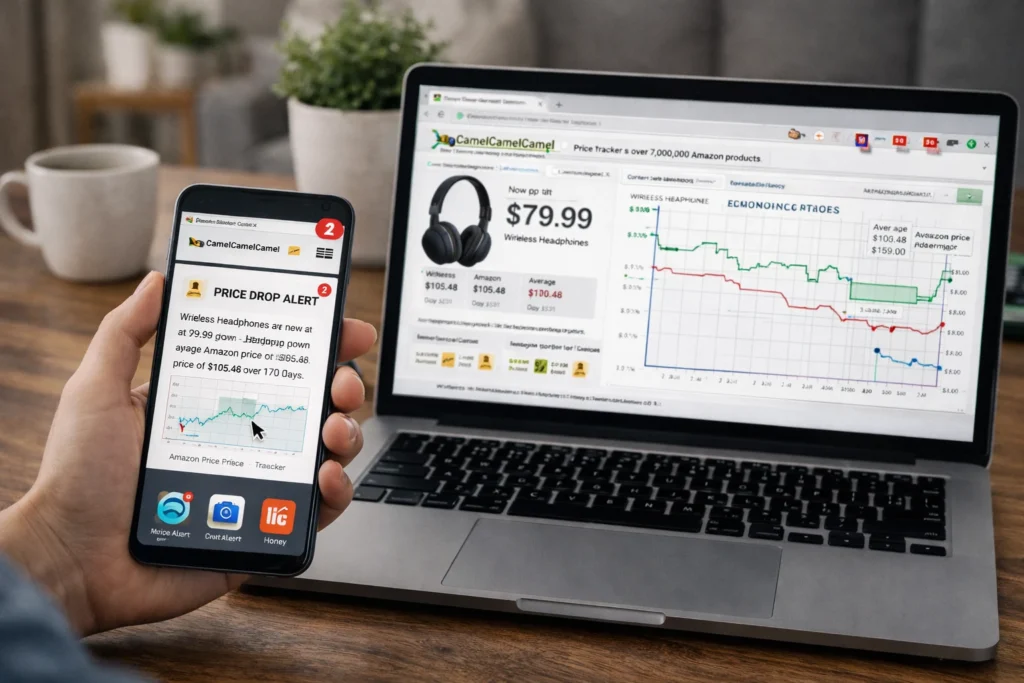
Missing a price drop can cost you hundreds. The right deal-tracking tools make it easy to catch the best deals. Let’s look at the top options:
- Browser Extensions: If you shop on Amazon or other major retailers, you can use extensions like CamelCamelCamel to track price history in seconds. You’ll know if the current price is high, average, or the lowest it’s been.
- Deal Tracking Apps: These are perfect if you don’t want to manually check prices every day. Slickdeals, for example, lets you set up alerts once, then send notifications straight to your inbox when items hit historical low prices.
- Comparison Websites: Want to compare prices across different stores at once? Apps like Google Shopping and RateHerder store years of pricing data from multiple retailers. This makes it easy to verify the best prices and find which store has the lowest rate right now.
With a good price tracker, you’ll know exactly when to click ‘buy’ on big-ticket items.
Stop Guessing and Start Comparing Today
Start checking historical prices before every purchase to see if current deals actually save you money. You’ll spot the patterns faster than you think.
Set up price alerts on items you plan to buy so you catch solid discounts when they match historical lows. Most tracking tools let you do this in under a minute.
Track a few products over the next month to see pricing patterns yourself. Once you see how prices move, you’ll build confidence in timing your purchases right. If you want verified deals sent straight to you without the research, visit Unsubscribe Deals for curated discounts across top retailers.