
Three listings can show the same 40% discount, yet the products may have very different histories. The main difference between open-box, refurbished, and new-on-sale products is what happened to the item before it reached you.
Most shoppers who find us at Unsubscribe Deals check the numbers first and the condition never. And it’s how a cheap buy turns expensive.
Returns feed a lot of this stock. The National Retail Federation put 2023 US retail returns at $743 billion, roughly 14.5% of total retail sales. Many of those returned products need somewhere to go, which is why they can later appear as open-box, refurbished, or discounted stock. This guide breaks down how each of those discounts works, what you give up, and where the better value sits right now.
Open Box vs Refurbished: Not the Same Kind of Deal
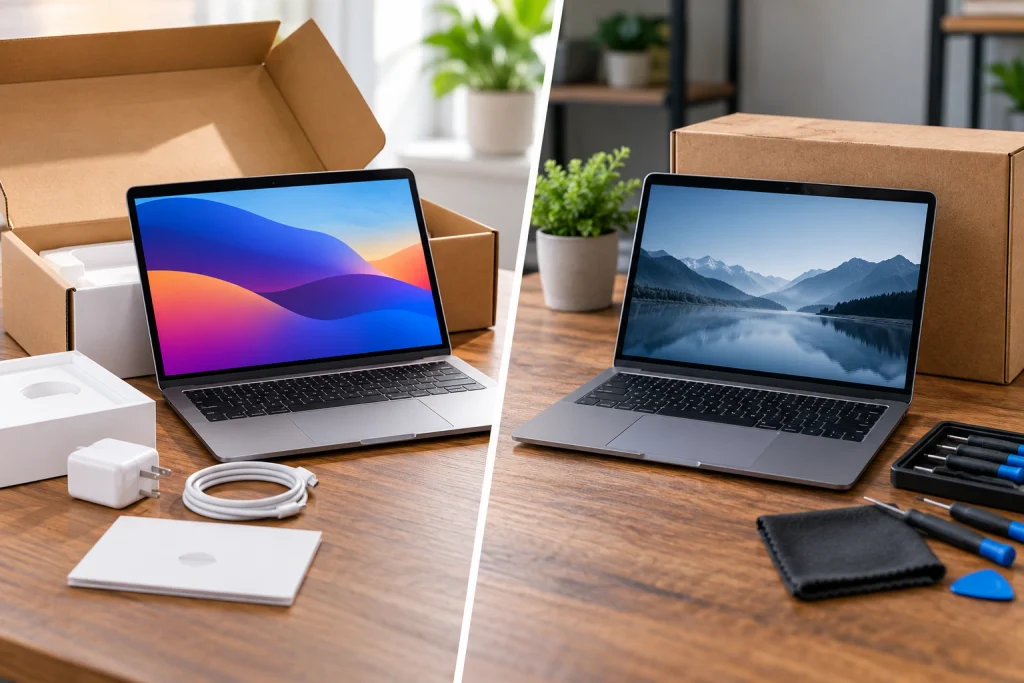
Stores use these labels for products with very different histories. Two boxes in the same clearance aisle carry different levels of risk, so knowing what each term means helps you judge the deal before you buy. That way, you can check the product’s condition before placing an order instead of finding out after it arrives.
Here is how all three options compare on the four details that decide most purchases.
| Option | What you get | Typical cut | Warranty |
|---|---|---|---|
| Open box | Returned or display stock, opened, barely used | 10% to 20% off the sticker | Whatever remains from the maker |
| Refurbished | Failed units repaired and retested in a seller Program | 20% to 50% off | 90 days to one year |
| New on sale | Sealed stock the store marks down | 5% to 40% off | Full warranty and terms |
The table shows the main trade-off at a glance. Warranty coverage deserves extra attention because it determines who pays if the product fails later. Check the warranty period and terms before choosing the cheapest option
Warranty coverage deserves extra attention because it determines who pays if the product fails later. Check the warranty period and terms before choosing the cheapest option.
Why Are Refurbished Deals Often Cheaper Than Open Box?
A unit that has failed once can be harder to sell, so sellers often offer a larger discount.
Open-box products do not have that repair history, which means stores can charge more for them. The price gap therefore reflects both the product’s condition and how confident buyers feel about its history.
That history also affects how much work the seller needs to do before listing the item. A returned television with a clean screen may only need a quick clean, power test, and new packaging. A refurbished television may need full diagnostics, replacement parts, a factory reset, and another round of testing.
And the extra testing and repairs can make refurbished products a good option. Some manufacturer refurbishment programs replace worn parts, such as batteries or outer shells, before the product is resold. This means a refurbished laptop can sometimes have newer replacement parts than an open-box model.
However, there are still a few trade-offs to consider. Refurbished products may come in plain packaging, include a generic charger, or have minor cosmetic marks.
Bottom Line: Open-box stock suits buyers who care about appearance and the unboxing experience. Refurbished products suit buyers who prioritise working condition over cosmetics.
Refurbished vs New on Sale: When Retail Price Cuts Beat Both Options

With that trade-off clear, sealed stock deserves a second look. A well-timed sale can land under the refurbished price. Sealed goods with a full warranty at 35% off usually beat a repaired unit at 40% off. And the warranty alone closes the gap
Usually, three common discount patterns can make new products especially worth buying. Each follows a pattern, so you can watch for the right time to shop.
Seasonal Clearance Events Worth Watching
Stores often cut prices on new products when they need to clear space for the next model. These discounts tend to appear at similar times each year. January is a common time for last season’s televisions to go on sale after CES, while July brings Prime Day and back-to-school laptop deals.
Black Friday still brings some of the biggest discounts on consumer electronics (although popular home theatre bundles can sell out quickly). Presidents’ Day and Labor Day weekends can also bring strong deals, especially on appliances, mattresses, and seasonal items.
We have tracked these cycles for years, so we time big buys to the week a replacement model ships. Retailers drop prices the moment new stock lands. Our own habit is to watch the latest news on launch dates instead of trusting a flash email.
How Store Price Matching Stacks Discounts
Price matching can help you get a lower price at your preferred store while still using its other discounts and rewards. Best Buy, Target, and Walmart have price-match policies that cover some competitor listings within set time limits.
You can lower the final price further by combining the match with store rewards, discounted gift cards or a store card that offers 3% to 5% back. This way, several smaller savings can sometimes beat one large advertised discount.
And don’t forget to check the policy details before you buy, as many stores exclude open-box items, refurbished products, and third-party marketplace listings. Rules can also vary between locations. So check with your local store before relying on a price match.
New or Used Overstock: Why Retailers Discount It
Overstock happens when a retailer orders more products than it can sell. For example, a buyer may order 10,000 units but sell only 6,000. The remaining stock takes up space and ties up money, so retailers often lower the price to clear it before the quarter ends.
Because the discount comes from excess stock rather than product problems, overstock can be one of the safer ways to save money. You still get sealed goods, a full warranty, and the same return period offered with regular stock.
However, the situation can change when liquidators buy that excess stock in bulk. They may resell it as mixed lots, with different product conditions on the same pallet. So check the listing photos and product details carefully rather than relying on the headline discount.
Finding the Latest Open Box Deals and Refurbished Deals Without Getting Burned

Once you know which discount fits, finding a trustworthy listing becomes the harder job. Good offers hide behind vague grading language and sellers who say nothing about a product’s history. If a discount looks too good to be true, the grading chart usually explains why.
Run through these five checks before any open box or refurbished purchase leaves your cart:
- Grade Letter Definitions: A grade can mean different things depending on the retailer. One store’s B-grade product may have the same condition as another store’s A-grade item, so look for a plain-English grading chart before you buy.
- Return Window Length: Find the exact return period before checkout, especially when buying open box stock. Fifteen days may be enough for some purchases, but it leaves less time to spot problems than a 30-day window.
- Box Content List: Cables, adapters, and mounting hardware are easy to overlook when comparing prices. A missing accessory can quickly eat into a 20% saving if you have to replace it yourself.
- Seller Identity: Buying directly from the manufacturer gives you a clear source for parts, software, and product testing. Marketplace resellers can still offer good deals, but check who is responsible for support before ordering.
- Deal Alert Signup: Price cuts often appear through email alerts and social media before stock runs out. Sign up if the seller is trustworthy, but read the privacy policy first. Check their Instagram and YouTube pages too, since limited-stock offers sometimes appear on social media before email.
These five checks can tell you if a discount is worth taking. Here’s our rule: if a listing cannot answer them clearly in writing, treat the low price as a warning rather than a deal. You can always contact us if you need help reading a grading chart, and we can help you identify what the seller has left out.
Picking the Right Deal for What You Really Need
Match the discount type to how long you plan to keep the item. Check the warranty length, return window, and cost of any missing accessories before you buy. These three details separate a good discount from an expensive mistake.
Ready to stop guessing which discount is worth taking? Follow Unsubscribe Deals for daily open-box deals and refurbished deals, checked against the list price before they ever reach your inbox.